



Export & Internationalization Advisors
Facilitating business in East Africa
Consulting
Cutomized analysis of local markets
Strategies tailored to your business
Your office in East Africa
Logístics
Local Presence
Market Opportunities
1. Economic Growth. East African countries have shown sustained economic growth over the past decade. According to recent World Bank statistics, this trend is expected to continue, driven by policies favorable to investment and infrastructure development.
2. Young Demographics. A distinctive feature of this region is its young population. With over 60% of the population under 25, there is a growing demand for technological, educational, and consumer products that exporting companies can capitalize on.
3. Trade Agreements. Securing trade agreements is a slow and arduous process. Perseverance and a local presence are essential for successful trade relationships. Once initial results are achieved, the benefits can be exponential.
4. Agricultural Sector. Agriculture remains a cornerstone of East African economies. There is significant demand for agricultural inputs, technology, and food products that can be supplied from other regions.
5. Population Growth and Demand for Urban Infrastructure. Over the next two decades, population growth is projected to be exponential, especially in urban areas. This population increase in urban environments will generate significant demand from suppliers in various sectors, with a particular focus on infrastructure and equipment for construction, renewable energy, etc.
6. The East African Community (EAC) Common Market, established in 2010, is a rapidly integrating economic bloc comprising Burundi, Kenya, Rwanda, South Sudan, Tanzania, and Uganda. It facilitates the free movement of goods, services, labor, and capital for more than 200 million people. The region acts as a major trading hub, with Kenya being its largest trading partner.
Challenges
1. Trade Regulations. Despite the opportunities, businesses face a complex regulatory environment. Each country has its own regulations that can complicate the import/export process, requiring in-depth knowledge of local laws.
2. Logistics and Infrastructure. Although there have been significant improvements, infrastructure in some countries can still present challenges. Deficiencies in transportation, warehousing, and supply chains can affect the efficiency of business operations.
3. Political Conditions. Political instability in some countries of the region can be a deterrent for foreign investors. It is crucial to conduct a thorough analysis of the political environment before embarking on an export strategy.
4. Local Competition. Companies wishing to enter the market must consider local competition, which may be well-established and have a better understanding of consumer preferences.
Exporting to East Africa presents a mixed landscape of opportunities and challenges. Interested companies should conduct detailed research and develop adaptive strategies that allow them to fully leverage the potential of this dynamic market. With a careful approach and strategic planning, entering this territory can result in significant growth and considerable long-term benefits.
Opportunities and Challenges in East Africa
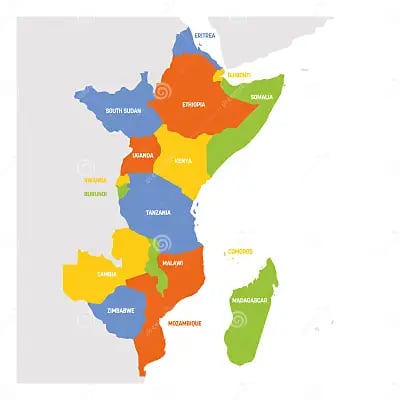
Exporting to East Africa represents a significant opportunity for companies across various industries worldwide. From our headquarters in Nairobi, we offer our services in the following countries: Ethiopia, Sudan, Somalia, Kenya, Uganda, Rwanda, Burundi, Tanzania, Mozambique, Mauritius, and Seychelles. This region, is not only experiencing robust economic growth but is also seeking products and services to meet the needs of its expanding population. Below, we outline some of the opportunities and challenges associated with this emerging market: